First Home in Newmarket, Ely or Bury St Edmunds
First Home
The Facts
BUY
The positives
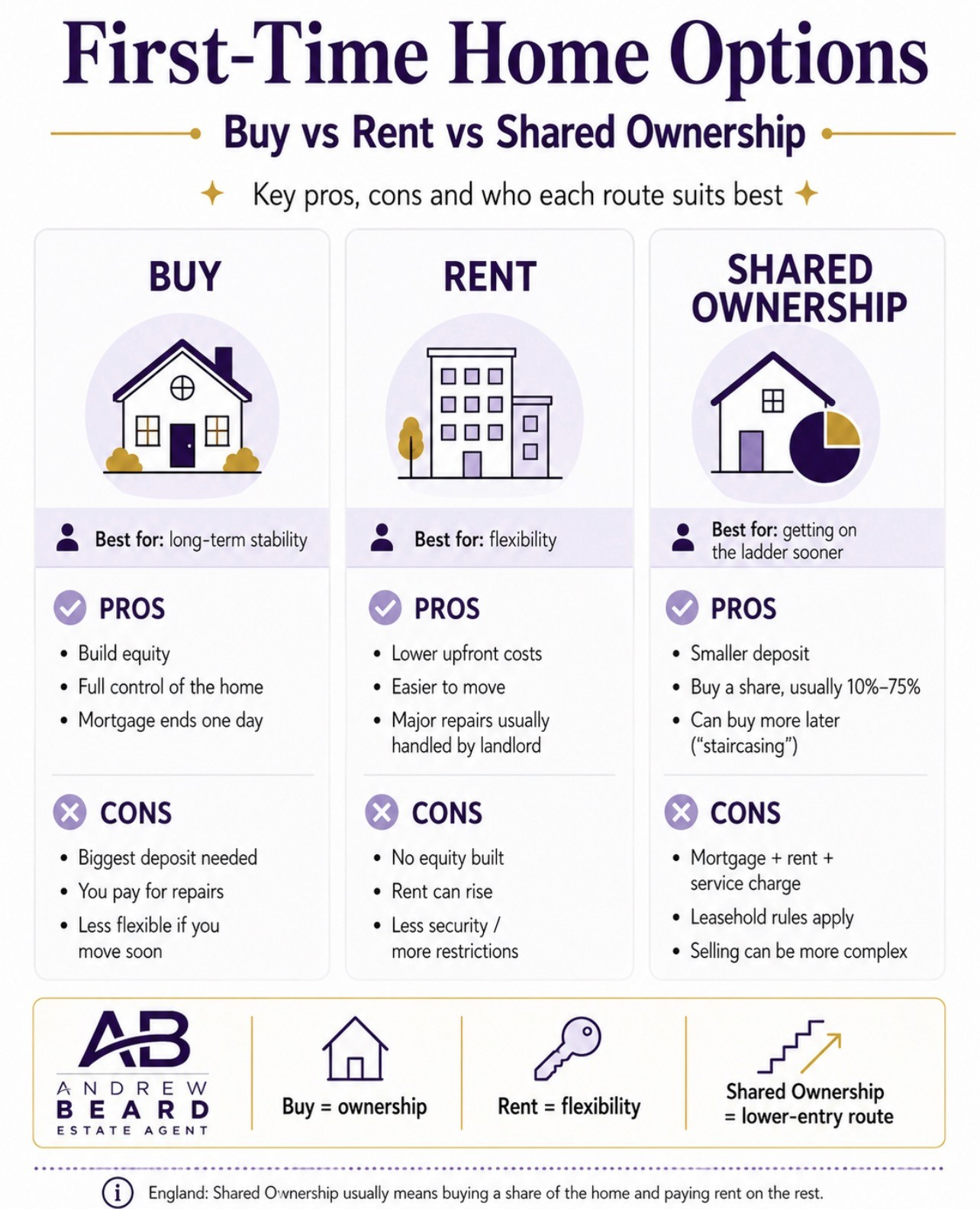
Build equity over time, benefit if the property rises in value, enjoy greater security and have the freedom to improve and personalise your home. Your mortgage also has an end date.
Things to consider
A larger upfront deposit is usually required, together with mortgage affordability checks, legal fees and survey costs. You are responsible for repairs and maintenance, and buying can offer less flexibility if your circumstances change. Property values can also fall.
RENT
The positives
A smaller upfront commitment, greater flexibility and usually less responsibility for major repairs. Renting can work particularly well if your job, location or lifestyle may change.
Things to consider
You do not build equity, rents can increase and you have less long-term security. There may also be restrictions around decorating, pets and how you use the property — and rent may continue indefinitely.
SHARED OWNERSHIP
The positives
Shared Ownership can reduce the deposit required because you initially buy only a percentage of the property. It can make a home accessible where buying outright is currently unaffordable, while still allowing you to build some equity.
You may also be able to purchase additional shares later through “staircasing”, increasing the proportion of the property you own.
Shared Ownership — The Important Bit
Under the current English scheme, buyers can typically purchase 10%–75% of a property and pay rent on the remaining share.
Household income generally needs to be £80,000 or less — or £90,000 or less in London — and applicants must normally be unable to afford a suitable property outright.
The big attraction is often the smaller deposit.
Example: £300,000 Property
Traditional purchase
10% deposit = £30,000
25% Shared Ownership purchase
Share purchased = £75,000
10% deposit on that share = £7,500
However, Shared Ownership can involve several ongoing monthly costs:
Mortgage on the share you own + rent on the remaining share + service charge
That is why Shared Ownership should not automatically be described as “cheaper than buying.”
Its main benefit is that it can make the initial step onto the property ladder more affordable.
As your circumstances improve, you may be able to staircase by purchasing additional shares, potentially reducing the rent payable on the part you do not own.
Which Option Might Suit You?
BUY
Best suited to buyers who can comfortably afford the deposit and mortgage and expect to remain in the property for several years.
RENT
Best suited where flexibility is important, circumstances may change, or buying would place too much pressure on your finances.
SHARED OWNERSHIP
Best suited to buyers who want the security and benefits of home ownership but cannot yet afford to purchase 100% of a suitable property.
There is no single “best” option — the right choice depends on your finances, plans and priorities.


