Homesellers / Buyers - Japanese Knotweek
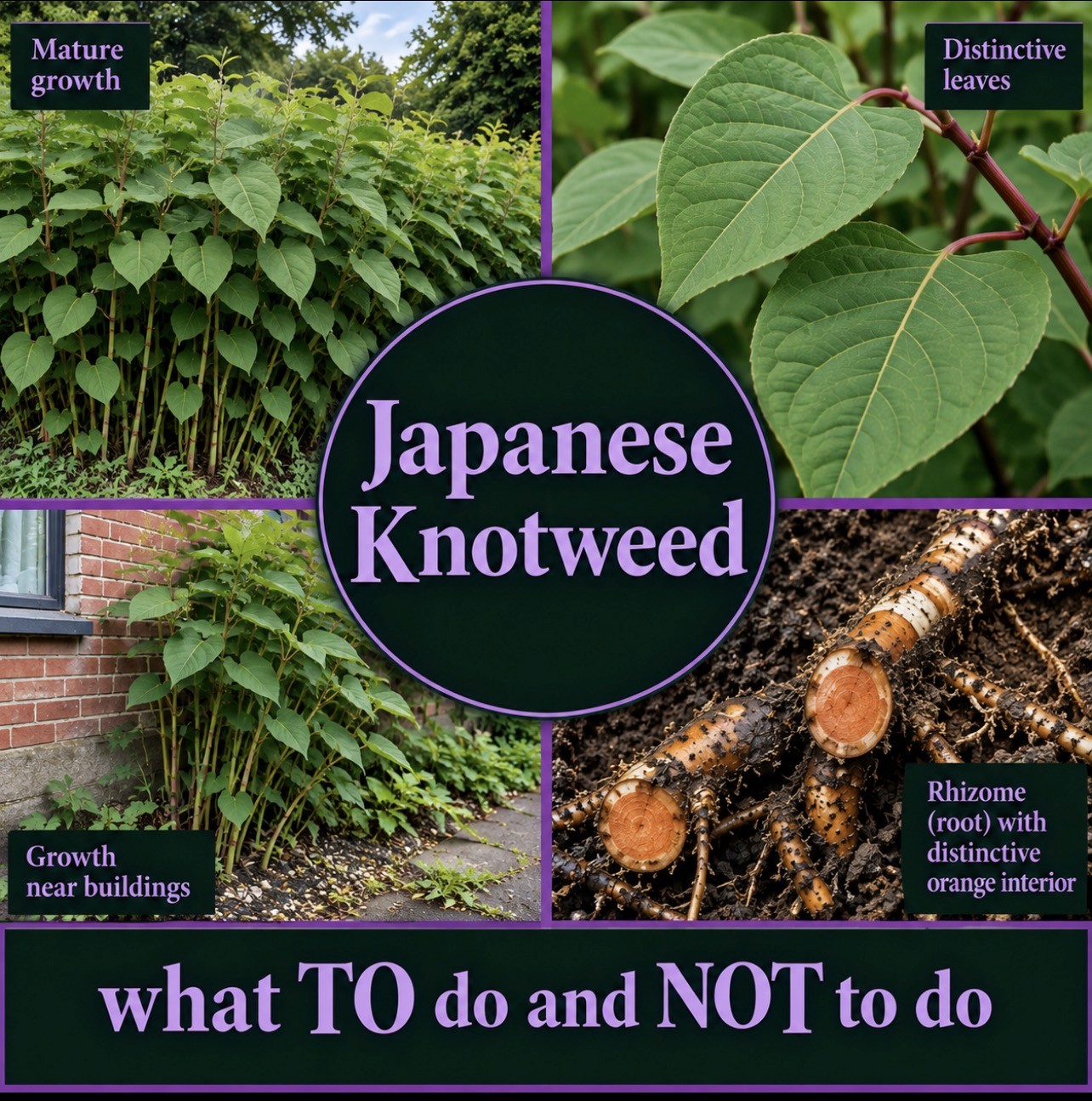
If you find Japanese knotweed on a property in England, the key is containment first, treatment second. It is manageable, but handling it incorrectly can spread it and create a much bigger problem.
What TO do
Leave it undisturbed initially. Photograph it and establish exactly where it is growing.
Get it positively identified by a reputable Japanese knotweed specialist, particularly if the property is being sold, bought or mortgaged.
Arrange a written management/treatment plan. For property transactions, using a specialist offering an appropriate insurance-backed guarantee can make matters considerably easier with lenders and buyers.
Prevent spread beyond the property. As the landowner, you must not allow knotweed to spread into the wild or onto neighbouring land.
Expect professional treatment often to involve carefully controlled herbicide applications over several growing seasons rather than simply removing the visible plant.
Tell contractors, gardeners and landscapers where it is before they undertake any excavation.
If soil needs to be excavated, use a specialist. Contaminated soil and knotweed material taken off site must go via an authorised waste route using appropriate carriers/facilities.
What NOT to do
Do not dig it up yourself. Underground rhizomes are the main problem; even a small fragment can regenerate. Government guidance says new growth can arise from rhizome pieces as small as 1 cm.
Do not strim, mow or flail it. That risks distributing fragments.
Do not rotavate the ground. This can chop rhizomes into hundreds of viable pieces.
Do not put it in your garden-waste or normal household-waste bin.
Do not put it on a compost heap.
Do not move contaminated soil around the garden.
Do not take contaminated soil or plant material to an ordinary tip without checking that it is authorised to accept it.
Do not sell contaminated soil as topsoil.
Don’t assume that cutting the plant down has killed it. The important part is the underground rhizome system.
If you’re selling a house
Japanese knotweed doesn’t automatically make a house unmortgageable. RICS substantially changed its approach from the old blanket “7-metre rule”. Current professional guidance assesses the actual infestation, damage and impact on amenity. Knotweed on neighbouring land is generally specifically categorised when it is within 3 metres of the boundary, rather than the old 7-metre approach.